
Diligence
Stories, observations, and lessons from the worlds of espionage, cybersecurity, leadership, and life.
Eric O’Neill · September 29, 2026 · 6 min read
TL;DR
- The U.S. military reportedly came close to intercepting a Chinese ship because AI-assisted intelligence wrongly claimed it carried nuclear weapons components.
- AI output is not intelligence until someone verifies it, because AI can be wrong quickly, confidently and at enormous scale.
- Before trusting an AI answer, ask for its sources, open them, go upstream, challenge the conclusion and verify consequential facts yourself.
- ShinyHunters claims it breached the FBI and stole terabytes of agent and applicant data. The FBI has not confirmed the breach.
I’m on the road again this week, which means you’re getting another dispatch from the Spy Hunter’s Notebook.
Most weeks, Spies, Lies and Cybercrime takes a deep dive into one major story shaping our digital world. But several times each year, when I’m traveling to speak about espionage, leadership, and cybersecurity, I’m going to do something different.
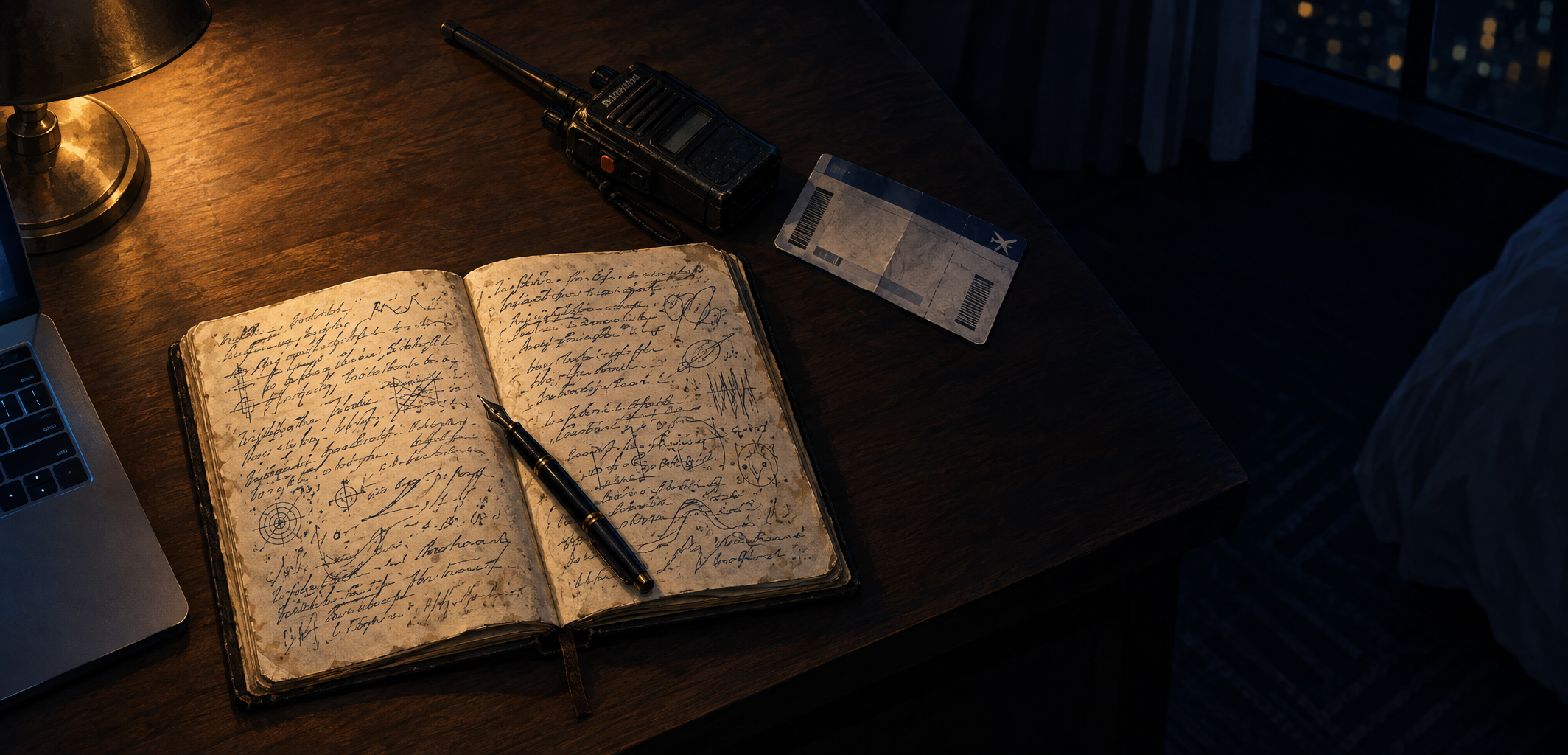
The best intelligence officers carry notebooks. This is mine.
This one is about diligence. Because whether you’re hunting spies at an airport or using artificial intelligence to analyze information that could send armed personnel toward a Chinese ship, there are some jobs where “close enough” really isn’t.
Case I Closed
THE SPY WHO FOUND ME
Years ago, my FBI surveillance team gathered in a Circuit City parking lot outside Washington, D.C. Our target was David Sheldon Boone, a former Army signals intelligence analyst who had sold some of America’s most sensitive secrets to the Soviet Union.
Boone had walked into the Soviet Embassy in Washington in 1988 and volunteered to spy. Over the next several years, he smuggled classified documents out of the NSA and passed them to Russian intelligence for money. One document detailed the targeting of U.S. nuclear weapons against the Soviet Union.
Years later, the FBI used a false-flag operation to lure Boone from Germany back onto American soil.
Our job was simple: identify him at Dulles Airport, follow him to his hotel and keep him under surveillance until FBI agents arrested him.
Then we lost him.
An entire team of FBI surveillance specialists somehow missed Boone coming through the airport.
I was positioned outside at ground transportation-the last man in the surveillance net-when a stranger walked up beside me.
“Excuse me. Do you know where the Hertz Gold bus stops?”
I froze.
Our photograph was old. He’d gained weight, his hair was grayer and he’d changed clothes. But the face looked right.
Then I noticed the black canvas laptop bag we’d been told Boone carried.
Hello, Mr. Boone.
I couldn’t alert my team without giving myself away, so I started talking to him. Boone told me he’d just arrived from Germany. I pretended I was visiting from New York.
While we chatted, I secretly clicked the transmit button on my FBI radio.
My team leader understood.
Do you have the target?
One click.
YES.
I rode the Hertz bus with Boone, watched him rent a car and quietly transmitted the vehicle description and license plate. Another surveillance team picked him up as he drove away.
My job was finished. The FBI arrested Boone later that night at his hotel.

Case I’m Watching
WHEN AI GETS INTELLIGENCE WRONG
The U.S. military reportedly came close to intercepting a Chinese ship because of intelligence generated with the help of AI that turned out to be false.
During the war with Iran this spring, a military intelligence report claimed that a Chinese vessel in the Middle East was transporting components for a nuclear weapons program.
The report was wrong.
An analyst had reportedly used an AI chatbot while analyzing intelligence about the ship’s manifest, combining open-source information with classified signals intelligence. The AI-assisted analysis incorrectly identified what the ship was carrying.
Then things got considerably more serious and could have started a war with China.
The analyst used AI again to help package the conclusion into a standard intelligence report. The resulting product traveled up the chain looking like the kind of authoritative intelligence decision-makers see every day.
Military personnel began preparing to intercept the ship. Armed personnel prepared to board. Aircraft were reportedly in the air.
Only after officials dug deeper was the mistake discovered.
Bad information entered an AI-assisted analysis. A human failed to catch the error. The conclusion was transformed into an official-looking intelligence product. Then real people began preparing a real military operation involving a Chinese vessel.
This is why I keep arguing that AI is an extraordinarily powerful tool-but AI output is not intelligence until someone verifies it.
The danger isn’t simply that AI can be wrong. Humans are wrong all the time.
AI can be wrong quickly, confidently and at enormous scale.
And once bad information is wrapped in the trappings of authority, the next person in the chain may never think to question it.
Tradecraft
NEVER CONFUSE AI ACCELERATION WITH VERIFICATION.
Here’s my five-step AI verification drill:
- Ask for the sources.
Tell the AI to provide the links, documents, dates and primary evidence supporting its conclusion. - Open them.
A citation isn’t verification. Make sure the source actually exists and says what the AI claims it says. - Go upstream.
Whenever possible, replace summaries and secondary reporting with the original study, court filing, government report, transcript or dataset. - Challenge the conclusion.
Ask: What evidence contradicts this answer? What assumptions are you making? Where are you least confident? - Verify consequential facts yourself.
If the answer affects money, health, reputation, security-or apparently whether you’re about to board a Chinese ship-don’t outsource the final judgment to a chatbot.
By the Numbers
$21 BILLION
That’s how much Americans reported losing to cyber-enabled crime in 2025, according to the FBI.
More than one million complaints were filed with the FBI’s IC3.
Cybercrime is the fastest growing business on earth.
From The Notebook
“Diligence is the mother of good luck.”
-Benjamin Franklin
A Story That Concerns Me
I appeared on NewsNation to discuss the recent criminal cyberattack on the FBI claimed by the notorious dark web cybercrime group ShinyHunters.
ShinyHunters is one of the more prolific and successful cybercrime syndicates in the past few years. In 2026 alone they have struck high profile targets including Panera and ADT to Rockstar Games, the European Commission, and more than 275 million students and teachers that use Canvas.
As a note of caution, ShinyHunters claims it breached the FBI and stole “terabytes” of data on agents and applicants. While reporters have independently verified that at least some of the personal information appears authentic, the FBI has not confirmed the breach, and the hackers’ claims about the scale, the amount of data stolen, and how deeply they penetrated FBI systems remain unverified.
There’s enough independent corroboration to take the claim very seriously.
I’m writing this somewhere in the middle of a pretty extraordinary run.
My latest speaking tour and a string of book signings for Spies, Lies, and Cybercrime, has taken me from Asheville, North Carolina, to Lake Geneva, Wisconsin, to Scottsdale, Arizona, and then Charlotte, North Carolina. I’m in Scottsdale as I write this.
By late this week, I’ll finally land back in Washington, D.C.
Lots of stages. Lots of airports. Lots of signed books. And, presumably, one very confused laundry machine when I get home.
Until then, the notebook travels with me.
Stay curious and always Think Like a Spy.
Originally published by Eric O’Neill in Spies, Lies & Cybercrime on September 29, 2026.